

Bossa Nova is a musical genre originating from Brazil which features the guitar as the main accompaniment. This mellow and beautiful style uses syncopated rhythms with a fingerpicking style of playing.
In this lesson, you’ll learn how to play Bossa Nova rhythms on guitar starting with basic patterns on one chord to more advanced patterns over a chord progression. The examples include guitar tabs and audio to guide you along the way.
Grab your guitar and let’s get started!
Skill Builders Roadmap Focus · View Roadmap →
Your goal is to keep the bass steady on beats 1 and 3 while playing a simple upper-chord rhythm independently. Start with Patterns 1 through 3, then apply one of those rhythms to a short chord progression. The later patterns are there to expand the style once the basic coordination feels comfortable.
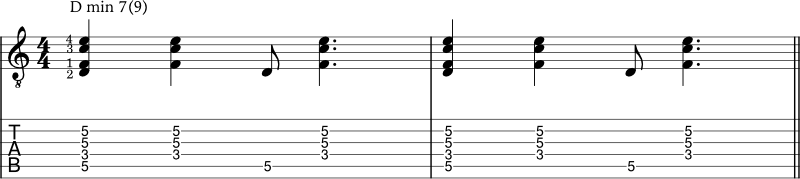
1. Basic rhythm over one chord
A typical characteristic in Bossa Nova patterns is that the bass notes land on beats 1 and 3 while the upper notes of the chord change. You will also see this in the following examples.
Try this: Stay on one chord until the bass notes on beats 1 and 3 feel steady. Let the upper chord rhythm sit around that pulse without rushing or pulling the bass out of time.
The numbers next to the notes on the top staff indicate which fingers to use on your fretting hand. If needed, see how to read guitar notation symbols.
2. Basic rhythm with alternating bass
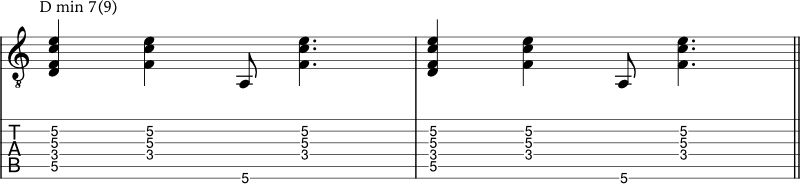
This pattern keeps the same basic rhythm, but the bass alternates to another chord tone on beat 3. Keep the bass pulse steady while the upper chord rhythm stays independent.
Practice goal: Play the alternating bass evenly without letting the chord rhythm interrupt beats 1 and 3.
3. Alternating rhythm: adding syncopation
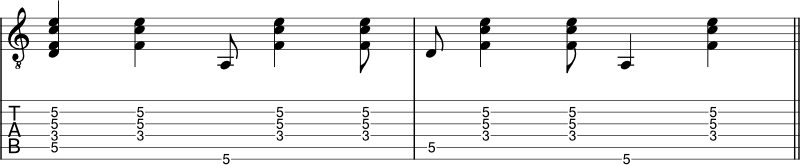
This variation adds syncopation to the upper chord rhythm while the bass continues to mark the pulse underneath.
Practice goal: Keep the bass steady while the upper notes land between the main beats. If the bass starts hesitating, slow the pattern down and separate the two parts before putting them back together.
Go deeper: Patterns 4 and 5 give you more rhythmic variations over a single chord. Explore them once you can keep the bass steady through the first three patterns.
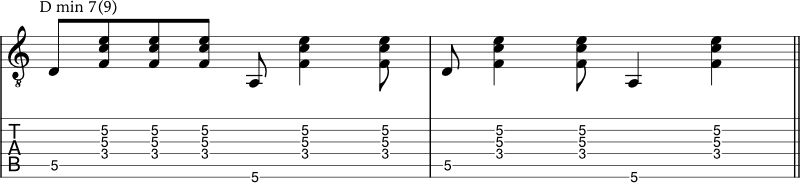
4. Rhythm variation: chord on upbeats
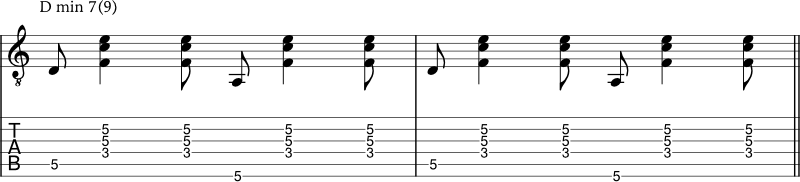
This particular Bossa Nova pattern places all of the upper notes of the chord in the upbeats.
5. Adding more rhythm (variation)
We can also add more repeated 8th note rhythms like in the example below.
Bossa Nova guitar chords
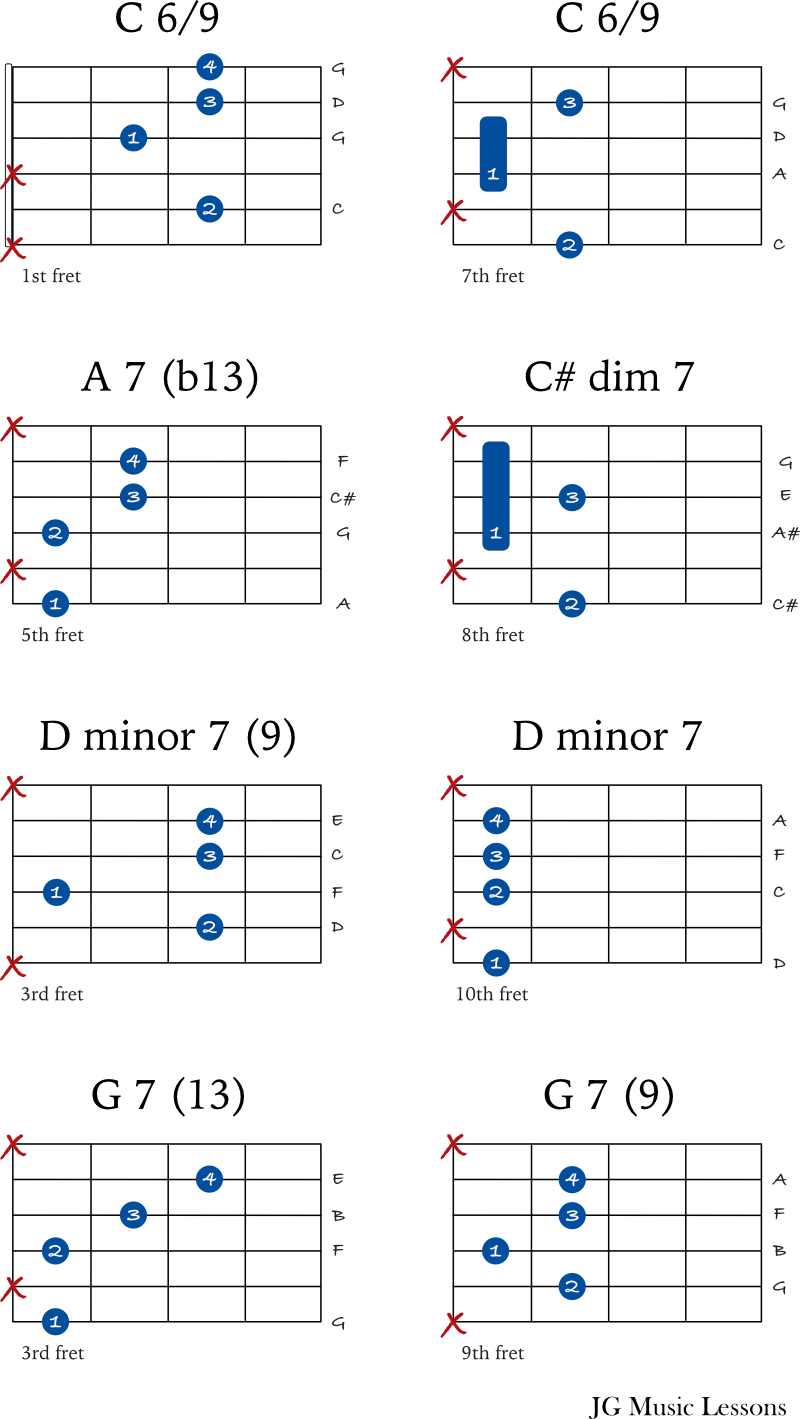
For the progression examples, we’ll use some fuller chord voicings that are common in Bossa Nova and jazz. Many include chord tones beyond a basic triad, such as 7ths and other extensions. Try each shape slowly and make sure you can change between them before adding the rhythm.
If you want to explore these chord types further, review essential 7th chords or this guide to jazz chords.
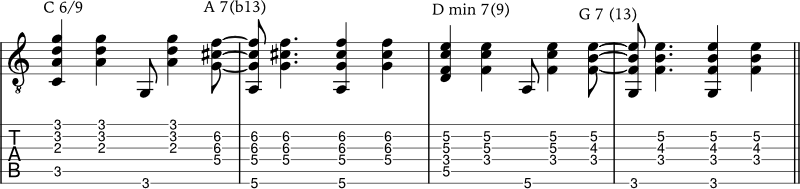
6. Rhythms with a chord progression
Now take one of the basic rhythms you’ve practiced and carry it through the chord progression. Focus on keeping the bass pulse consistent as the chord shapes change.
Try this: Use one simple Bossa Nova pattern for the entire progression first. Don’t change rhythms from chord to chord until you can keep the pulse steady through the changes.
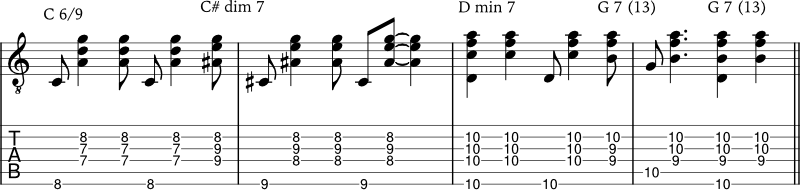
7. Progression with chord variations (mixed rhythms)
This last example shows how you can mix up all the different rhythms while still switching between chords.
Included in Pro Membership ✨
Wrapping Up
The foundation of a Bossa Nova rhythm is the relationship between a steady bass pulse and a more syncopated chord rhythm above it. If the bass stays grounded, the upper rhythm can move around it without the groove falling apart.
Start with Patterns 1 through 3 on one chord, then take one pattern through the chord progression. Keep the rhythm simple until the bass and chord changes feel connected.
Once that feels comfortable, explore the later variations and mix different rhythms together. You can also revisit musical strumming or Travis picking to compare how different accompaniment styles create groove.
Before continuing
You’re ready to continue when you can keep the bass steady on beats 1 and 3, play a simple upper-chord rhythm without losing that pulse, and carry one Bossa Nova pattern through a short chord progression.
Next: Continue in the Skill Builders Roadmap to see where this rhythm skill fits and what to practice next.
📘 Get the free Practice Blueprint: Build better habits and make your progress more consistent. Download the free guide →