
The Major 6 diminished scale is an eight-note scale associated with jazz pianist and educator Barry Harris. It combines the sound of a Major 6 chord with a diminished 7 chord.
In this lesson, you’ll learn how the scale is built, play it across the fretboard, and use it to create melodic movement over Major harmony.
Mastery Roadmap Focus · View Roadmap →
Start with one Major scale and add the b6 to create the Major 6 diminished scale. Find the Major 6 and diminished 7 chord tones inside it, then use one scale shape to create a short melodic line over a Major chord.
Understanding the Major 6th diminished scale
The Major 6 diminished scale starts with a Major scale and adds one extra note between the 5th and 6th: the b6.
The formula is 1, 2, 3, 4, 5, b6, 6, 7.
For example, C Major contains C, D, E, F, G, A, and B. Add Ab and you get C Major 6 diminished: C, D, E, F, G, Ab, A, and B.
The eight notes can be divided into two four-note chords:
- C Major 6: C, E, G, A
- D diminished 7: D, F, Ab, B
Alternating between these two groups creates movement between a more stable Major 6 sound and the tension of the diminished 7 chord.
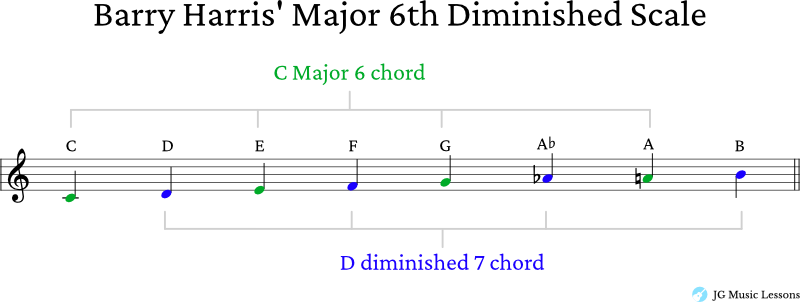
These two chords make up all notes of the Major 6 diminished scale:

Play C Major 6, then D diminished 7, then return to C Major 6. Listen to the contrast between the more settled Major 6 sound and the tension of the diminished chord.
You can also apply these chord movements with drop 2 voicings, which you practiced earlier in the Mastery Roadmap.
What makes this scale useful?
- The Major 6 and diminished 7 chord tones alternate throughout the scale, giving you built-in tension and release.
- Adding the b6 gives the scale eight notes, which creates useful rhythmic and melodic patterns when improvising.
Major 6th diminished scale chart in all keys
Use this chart as a reference when you want to build the Major 6 diminished scale from another root. Start with the Major scale and add the b6.
| Major 6th dim scale | 1 | 2 | 3 | 4 | 5 | b6 | 6 | 7 |
|---|---|---|---|---|---|---|---|---|
| C Maj 6 dim scale | C | D | E | F | G | Ab | A | B |
| D Maj 6 dim scale | D | E | F# | G | A | Bb | B | C# |
| E Maj 6 dim scale | E | F# | G# | A | B | C | C# | D# |
| F Maj 6 dim scale | F | G | A | Bb | C | Db | D | E |
| G Maj 6 dim scale | G | A | B | C | D | Eb | E | F# |
| A Maj 6 dim scale | A | B | C# | D | E | F | F# | G# |
| B Maj 6 dim scale | B | C# | D# | E | F# | G | G# | A# |
| Db Maj 6 dim scale | Db | Eb | F | Gb | Ab | A | Bb | C |
| Eb Maj 6 dim scale | Eb | F | G | Ab | Bb | B | C | D |
| Gb Maj 6 dim scale | Gb | Ab | Bb | B | Db | D | Eb | F |
| Ab Maj 6 dim scale | Ab | Bb | C | Db | Eb | E | F | G |
| Bb Maj 6 dim scale | Bb | C | D | Eb | F | Gb | G | A |
Major 6th diminished scale shapes on guitar
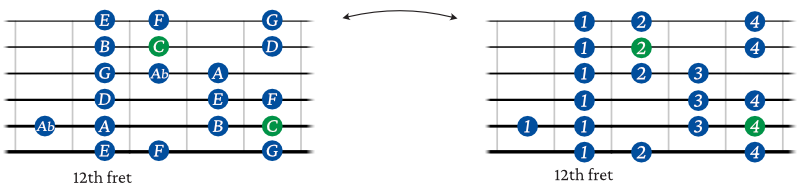
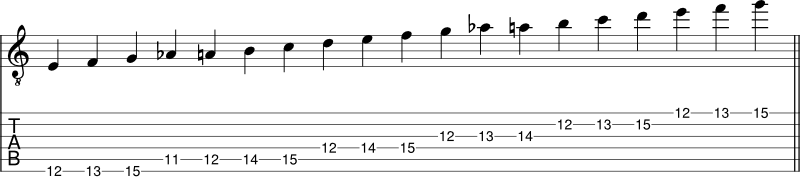
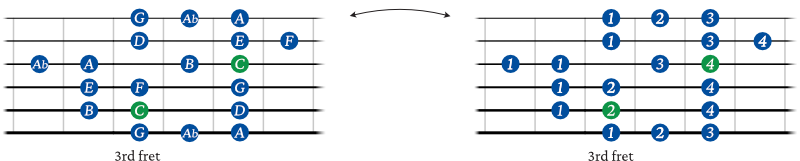
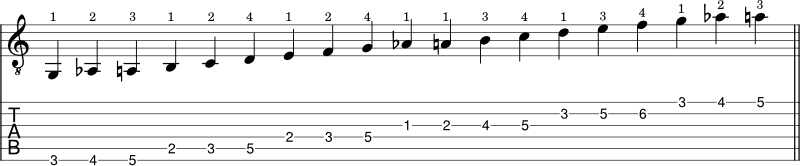
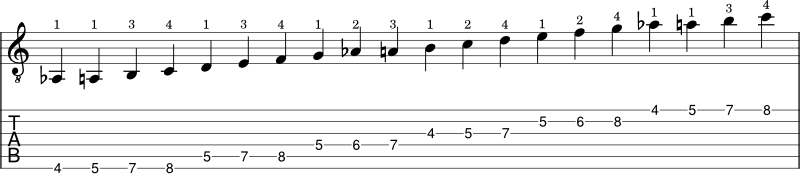
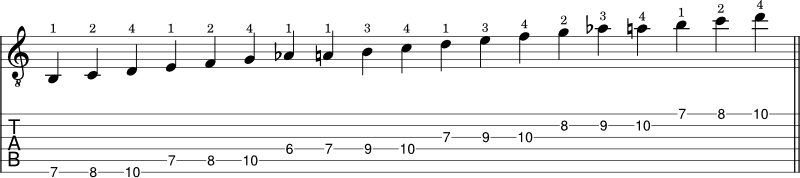
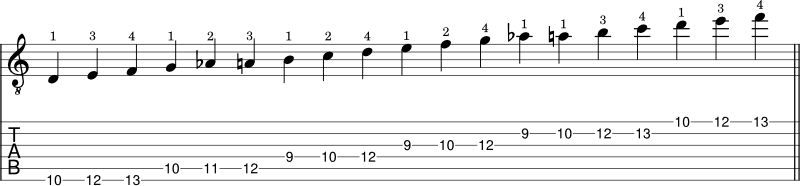
This section covers the Major 6th diminished scale shapes throughout the guitar fretboard. Each shape includes music notation with guitar tabs to show you how to apply them in the key of C Major. However, you can still use these same shapes to play any other Major 6th diminished scales.
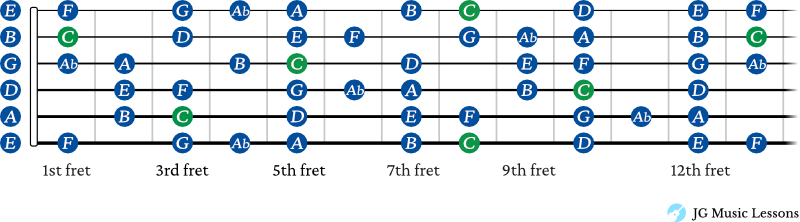
Afterward, you’ll see all 5 shapes connected on the fretboard in one chart.
How to read the scale charts
For the charts below:
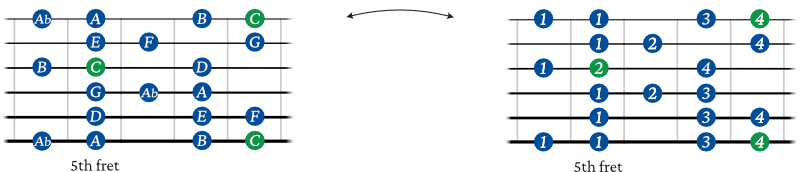
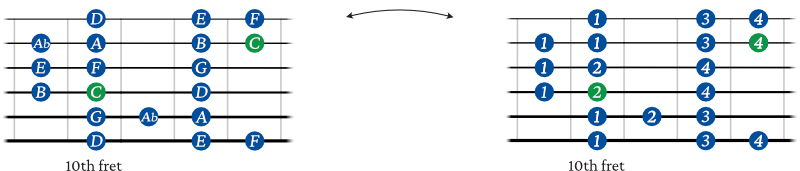
- The left side of the charts shows you the scale notes and the right side shows you the suggested fingering.
- The lowest horizontal line represents the thickest string (Low E) and the top horizontal line represents the thinnest string (high E).
- The green circles represent the root note of the scale and the blue notes are every scale note in between.
- Circles to the left of a chart represent open strings.
If needed, check this link for more on how to read guitar notation symbols.
The five shapes below show how the Major 6 diminished scale covers the fretboard. Start with one comfortable position and use the remaining shapes later to expand into nearby areas of the neck.
Shape 1
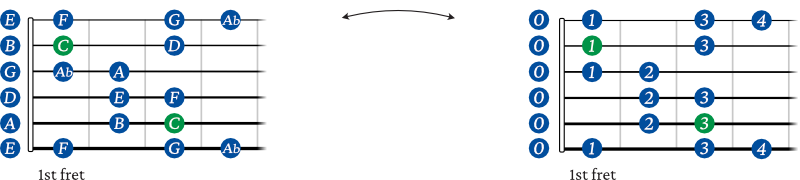
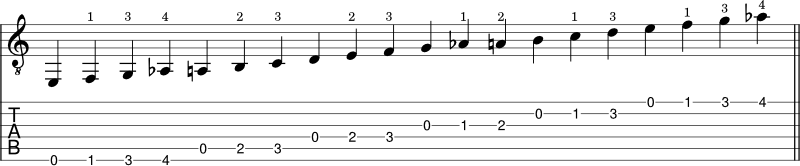
Play Shape 1 slowly and identify the root, 3rd, 5th, b6, and 6. Then separate the notes into the two chord sounds inside the scale: Major 6 (1, 3, 5, 6) and diminished 7 (2, 4, b6, 7). Play each group on its own, then return to the full scale and listen to how the two sounds combine.
Scale shape 1 (all fretted notes)
If your guitar gives you comfortable access past the 12th fret, you can also play Shape 1 like this:
Shape 2
Shape 3
Shape 4
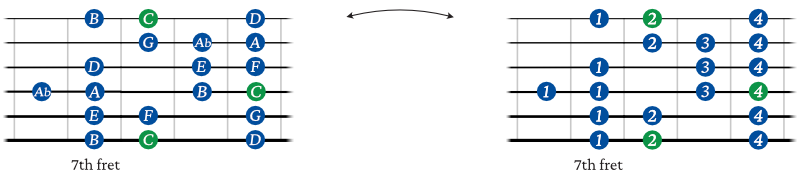
Shape 5
Once your first position feels comfortable, choose one neighboring shape and look for the notes where the two positions overlap.
Connecting the Major 6th diminished scale shapes on guitar
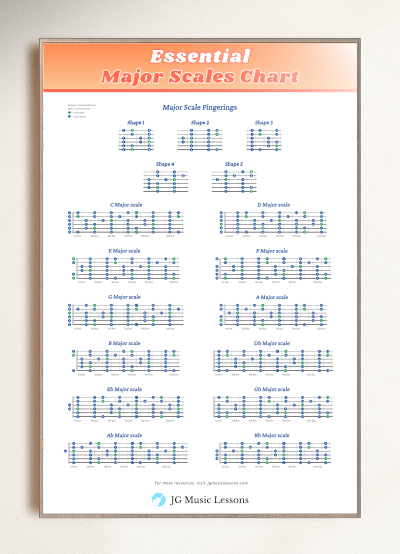
The diagram below shows how the five positions connect across the fretboard. Use it as a reference when you want to move beyond the one or two shapes you’re currently practicing.
Major 6 diminished scale application examples
The first three examples show how the Major 6 diminished scale can become melodic phrases over Major harmony. Examples 4 through 6 explore different ways to organize the notes using intervals and chord tones.
Example 1
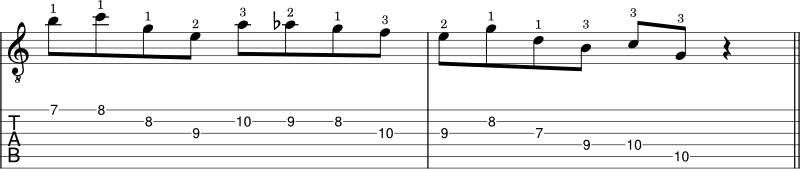
Learn Example 1, then change the rhythm or note order to create a short variation of your own. Keep listening for the Major 6 sound underneath the line.
Example 2

Example 3
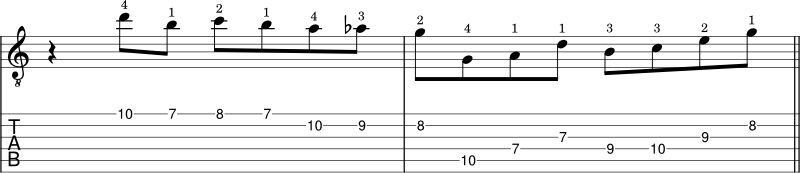
Example 4 using thirds
The only exception where you get an interval of a Major 2nd is between the scale degrees 5 and 6 on measure 2.

Example 5 using chord tones
This example alternates groups of notes from the C Major 6 and D diminished 7 chords in different positions.
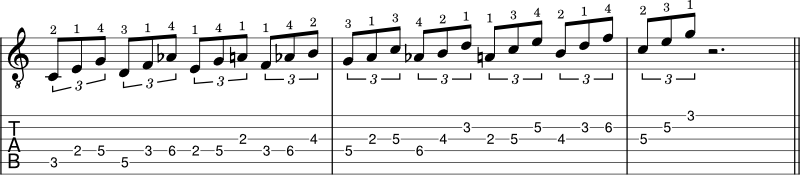
Example 6 using four-note arpeggios
For this example, we’re alternating four-note arpeggios from each of the two chords.
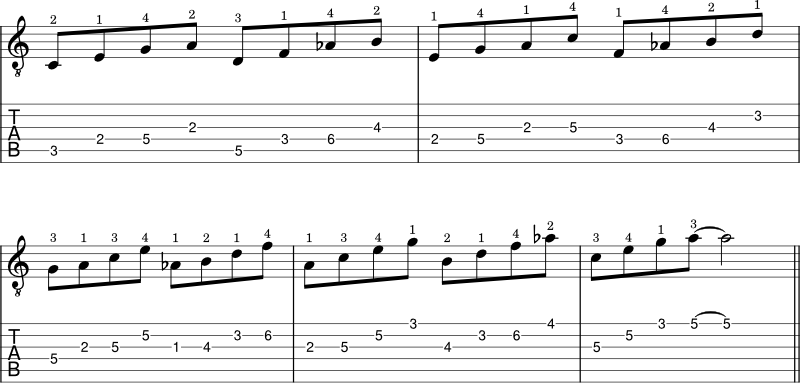
Put on a C Major or C Major 6 backing track. First alternate the C Major 6 and D diminished 7 arpeggios slowly. Then use a few notes from each chord to create a short phrase, listening for how the diminished notes create movement before resolving back into the Major sound.
Wrapping Up
The Major 6 diminished scale adds one note, the b6, to the Major scale to create the formula 1, 2, 3, 4, 5, b6, 6, 7.
One of its most useful features is the way the notes alternate between a Major 6 chord and a diminished 7 chord, giving you a simple way to create movement and tension over Major harmony.
Start with one scale shape, find those two chord sounds inside it, and use them to create short melodic ideas. The additional shapes and examples in this lesson give you more ways to expand the concept across the fretboard.
Before continuing
You’re ready to continue when you can build the Major 6 diminished scale by adding the b6 to a Major scale, play one shape, identify the Major 6 and diminished 7 chord tones inside it, and use the scale to create a short phrase over a Major chord.
Next: Continue in the Mastery Roadmap to keep developing advanced scale sounds and their musical application.
You have to enjoy playing. The old-timers did, and that’s one reason why their music is a lasting music. I feel that I play jazz to entertain the listener, and you just can’t do that unless you yourself are entertained at the same time. – Barry Harris
📘 Get the free Practice Blueprint: Build better habits and make your progress more consistent. Download the free guide →