

Extended chords build on familiar chord structures by adding notes such as the 9th, 11th, or 13th.
In this lesson, you’ll start with simple 7th-chord shapes, add extensions one note at a time, and hear how those added notes change the sound of a progression.
Mastery Roadmap Focus · View Roadmap →
Start with one familiar 7th-chord shell and add a 9th or 13th above it. Compare the extended chord with the plain 7th chord, then use both versions inside a short progression and listen to how the added note changes the color.
What are extended chords?
Extended chords add notes above the 7th-chord structure, most commonly the 9th, 11th, and 13th.
For example, G7 contains G, B, D, and F. From there, additional scale tones can be treated as the 9th, 11th, and 13th to create different extended sounds.
Extended chords are common in styles such as jazz, bossa nova, R&B, neo-soul, and gospel, where these added notes can create more harmonic color.
See the charts below to understand how these extensions work on minor 7, Dominant 7 and Major 7 chords.
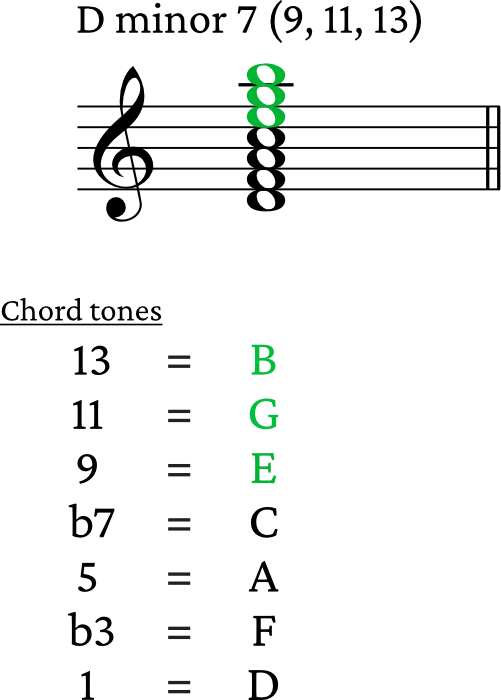
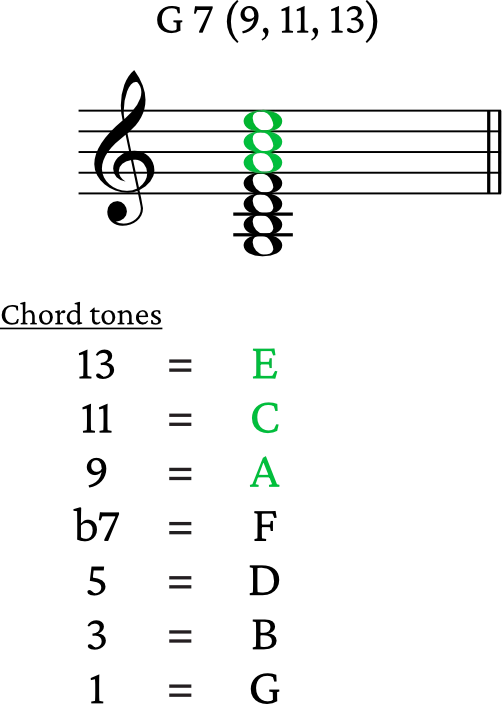
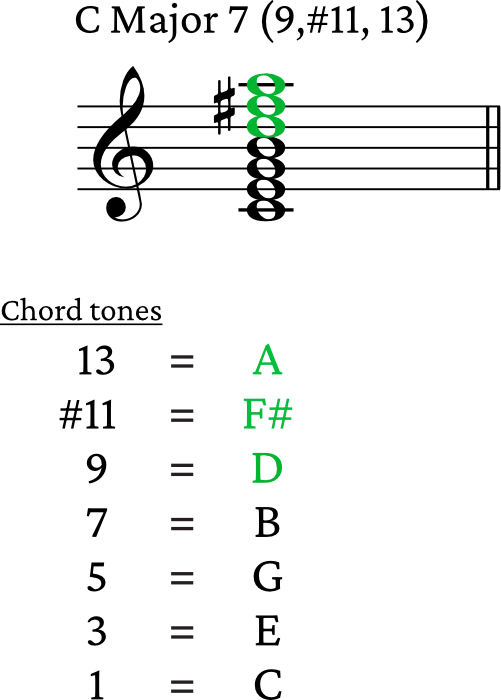
Building extended chords on guitar – Getting started
A practical way to build extended chords on guitar is to start with a shell chord containing the root, 3rd, and 7th.
The 3rd and 7th tell you a lot about the chord quality, while the simpler three-note shape leaves room for an added 9th, 11th, or 13th.
Shell chord examples
Before we build upon these types of chords, here are 3 examples of shell chords. The chord tones will be written to the right of the chord charts.
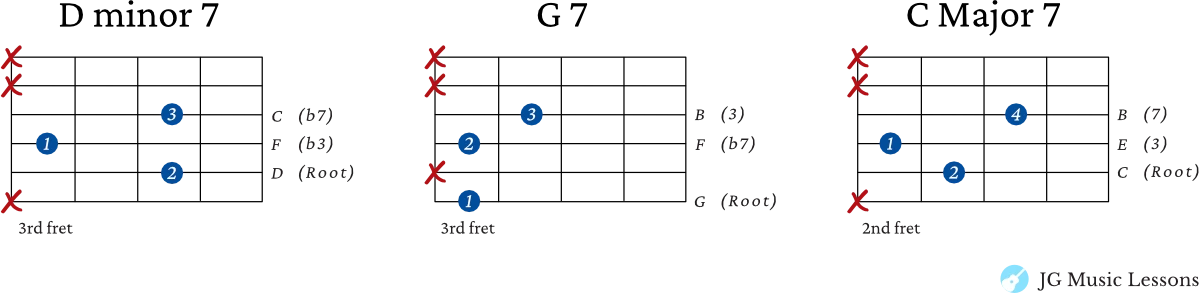
If you don’t know these already, see how to play shell chords on guitar.
Choose one Major 7, minor 7, or dominant 7 shell chord. Identify the root, 3rd, and 7th as you play it. Then move the shape to one other root while keeping track of the same chord tones.
Finding extended notes above shell chords
Once the shell chord is clear, choose one extension you want to add, such as the 9th or 13th, and locate that scale degree near the voicing.
Add the note to the shell chord and compare the new sound with the original three-note structure.
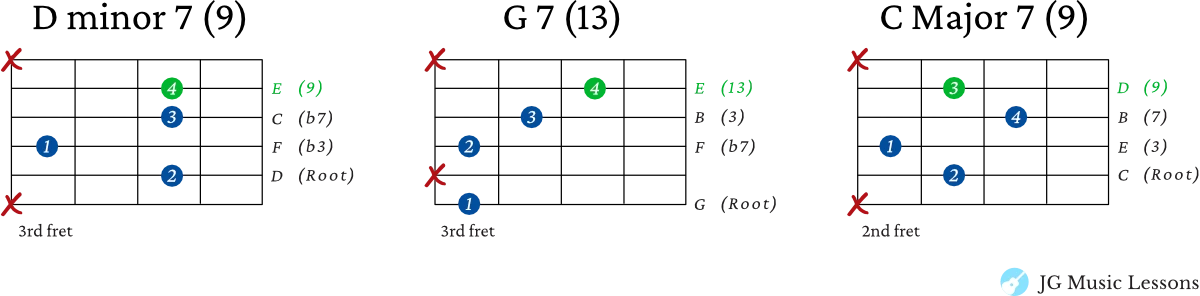
Take one shell chord and add a single extension. Play the shell by itself first, then the extended version. Listen specifically for the added note and how it changes the overall sound.
The root, 3rd, 5th, and 7th define the basic chord structure. Extensions such as the 9th, 11th, and 13th add additional color. On guitar, some chord tones may be omitted to make the voicing more practical.
The voicings below give you several ways to apply this idea to Major 7, dominant 7, minor 7, Major 6, and minor 6 chords. Start with one chord quality and one string set, then use the remaining shapes as a reference when you want more options.
Extended chord examples
Now that you have an idea of how this concept works, let’s explore more possibilities for adding extended notes starting on different strings.
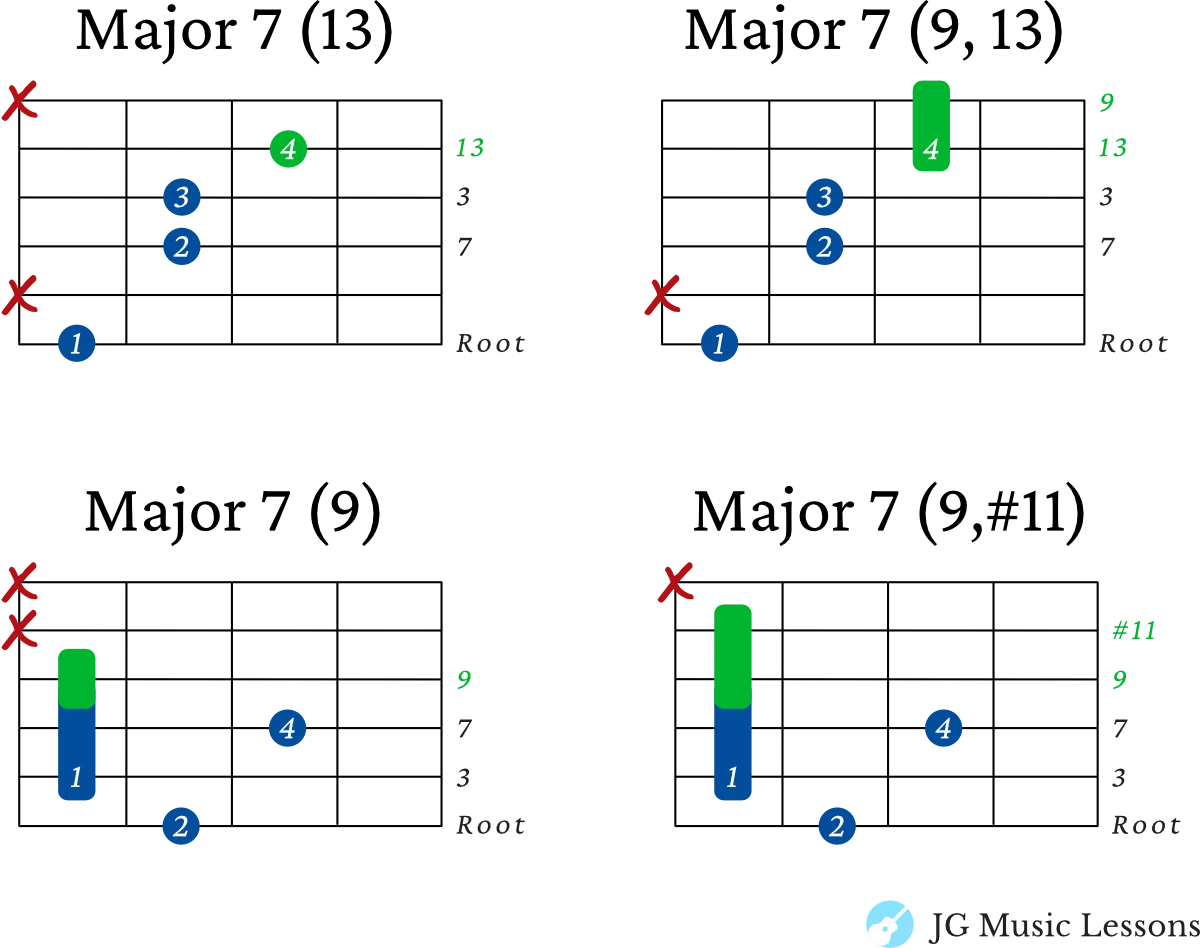
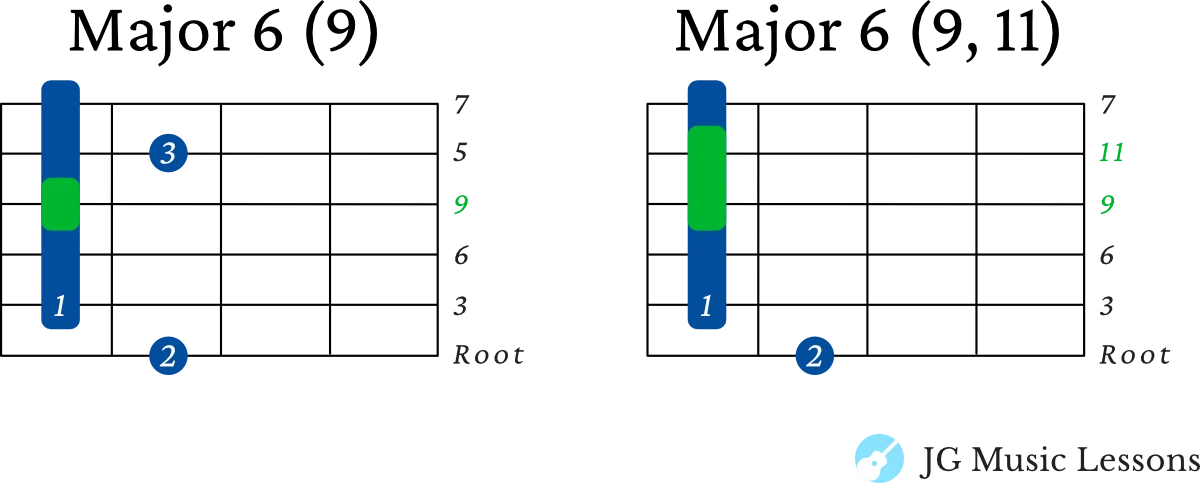
The following examples are movable shapes that can be shifted to any root note on the string mentioned.
Major 7 extended chords on the 6th string
Major 7 extended chords on the 5th string
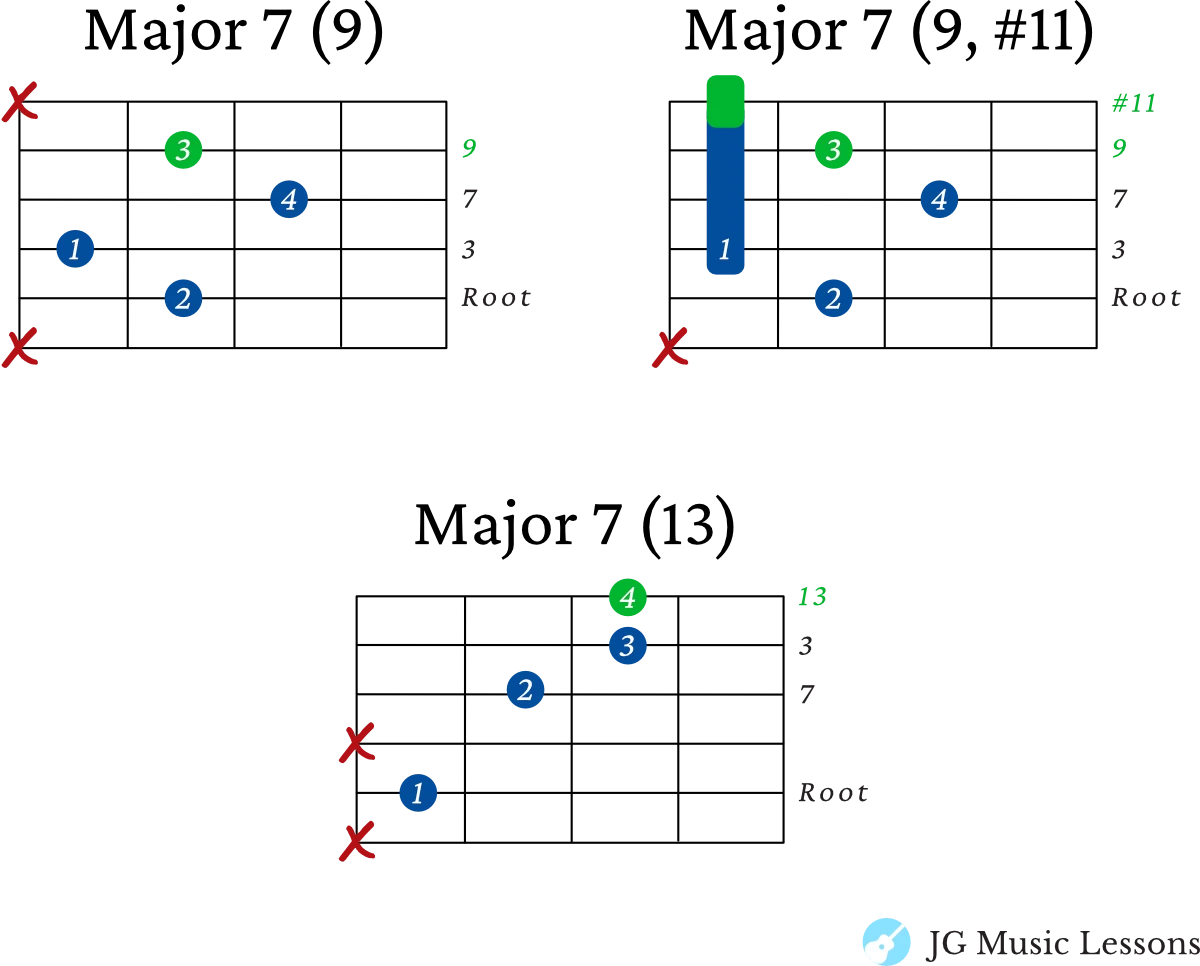
Choose one extended voicing and move it to three different roots. Name the chord and extension each time, then return to the first root and compare it with the plain 7th chord.
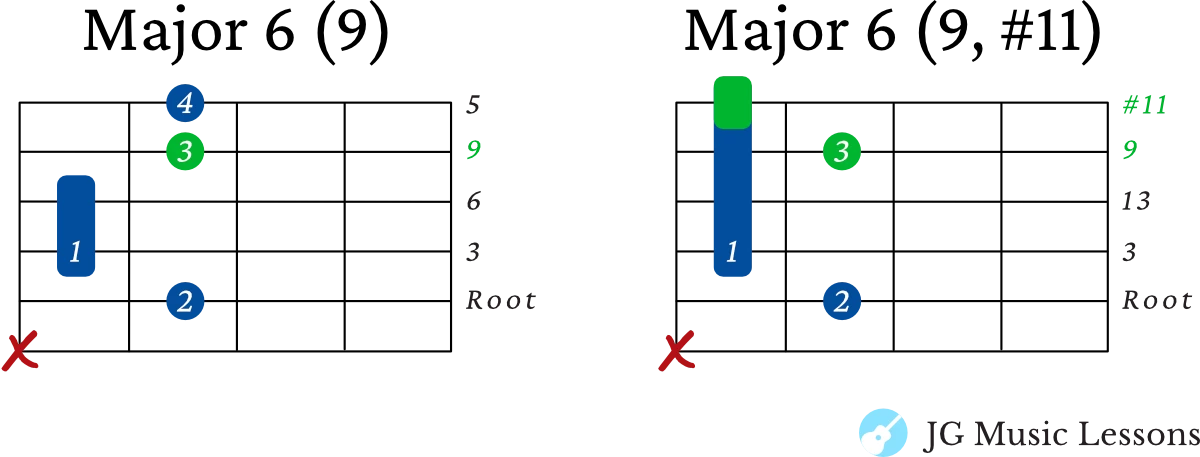
Major 6 extended chords on the 6th string
Major 6 extended chords on the 5th string
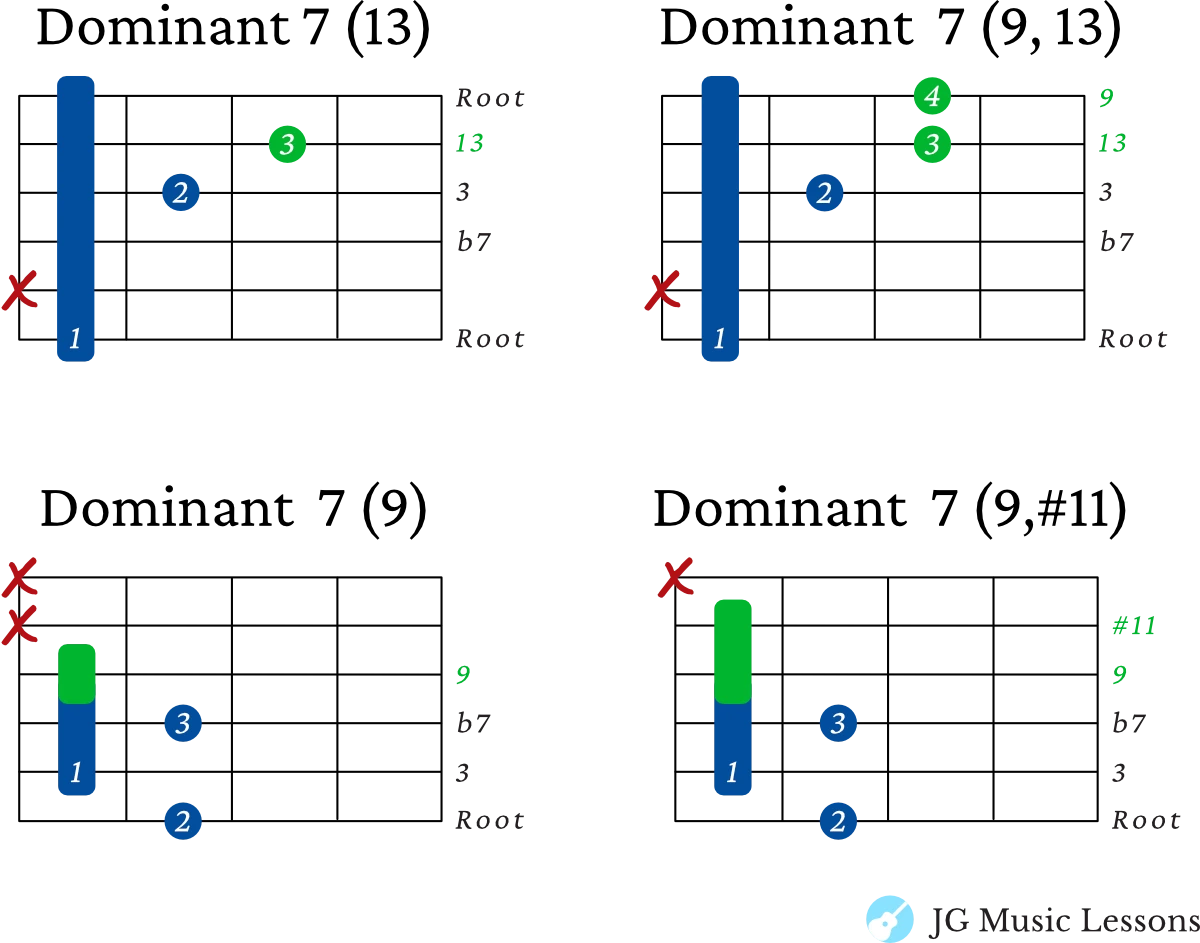
Dominant 7 extended chords on the 6th string
Dominant 7 extended chords on the 5th string
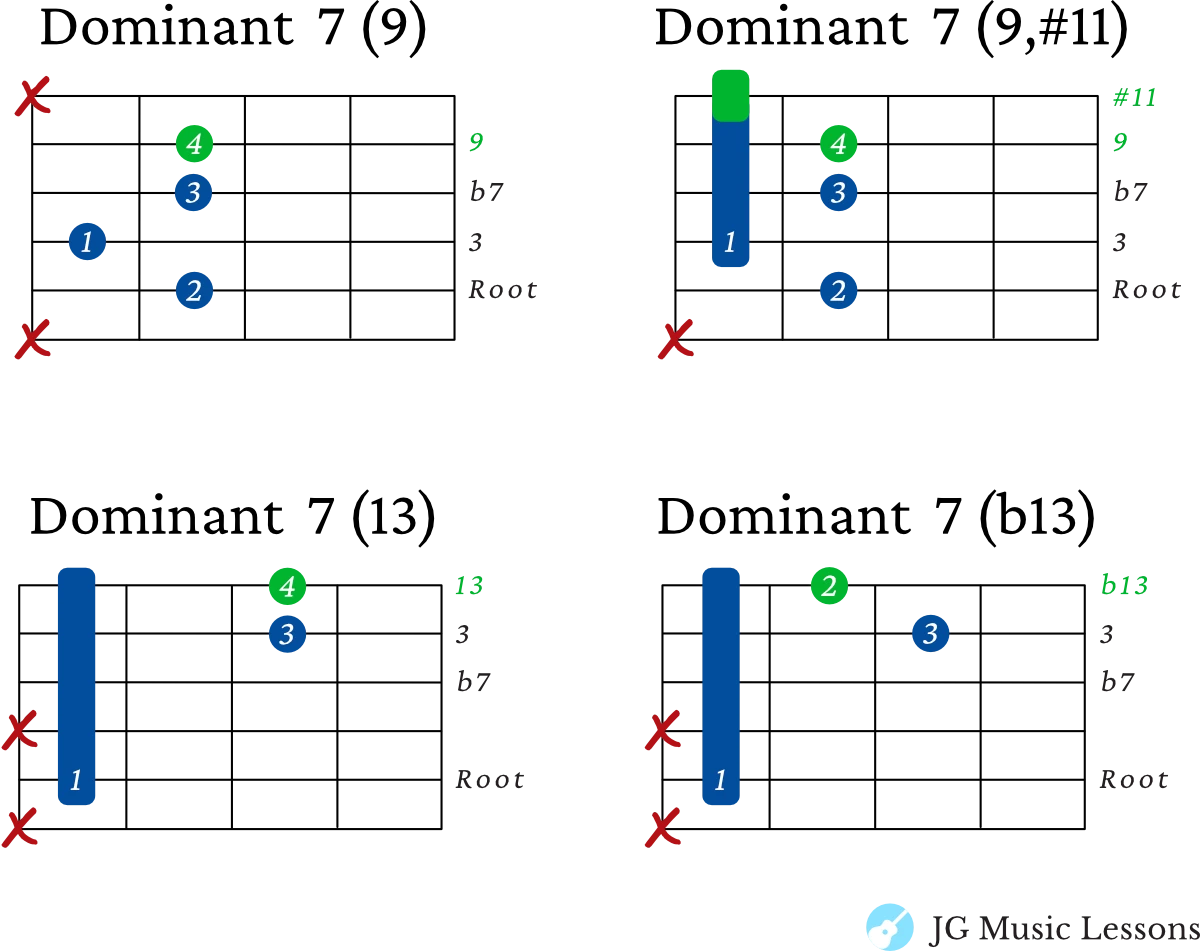
Dominant chords give you additional options because the 9th and 13th can also be altered. Once the basic 9th and 13th sounds are familiar, compare some of the variations below.
For dominant 7 chords, you can lower the 13th by a half step or raise or lower the 9th by a half step to create variations such as these:
- Dominant 7 (9, 13)
- Dominant 7 (b9, 13)
- Dominant 7 (#9, 13)
Or also:
- Dominant 7 (9, b13)
- Dominant 7 (b9, b13)
- Dominant 7 (#9, b13)
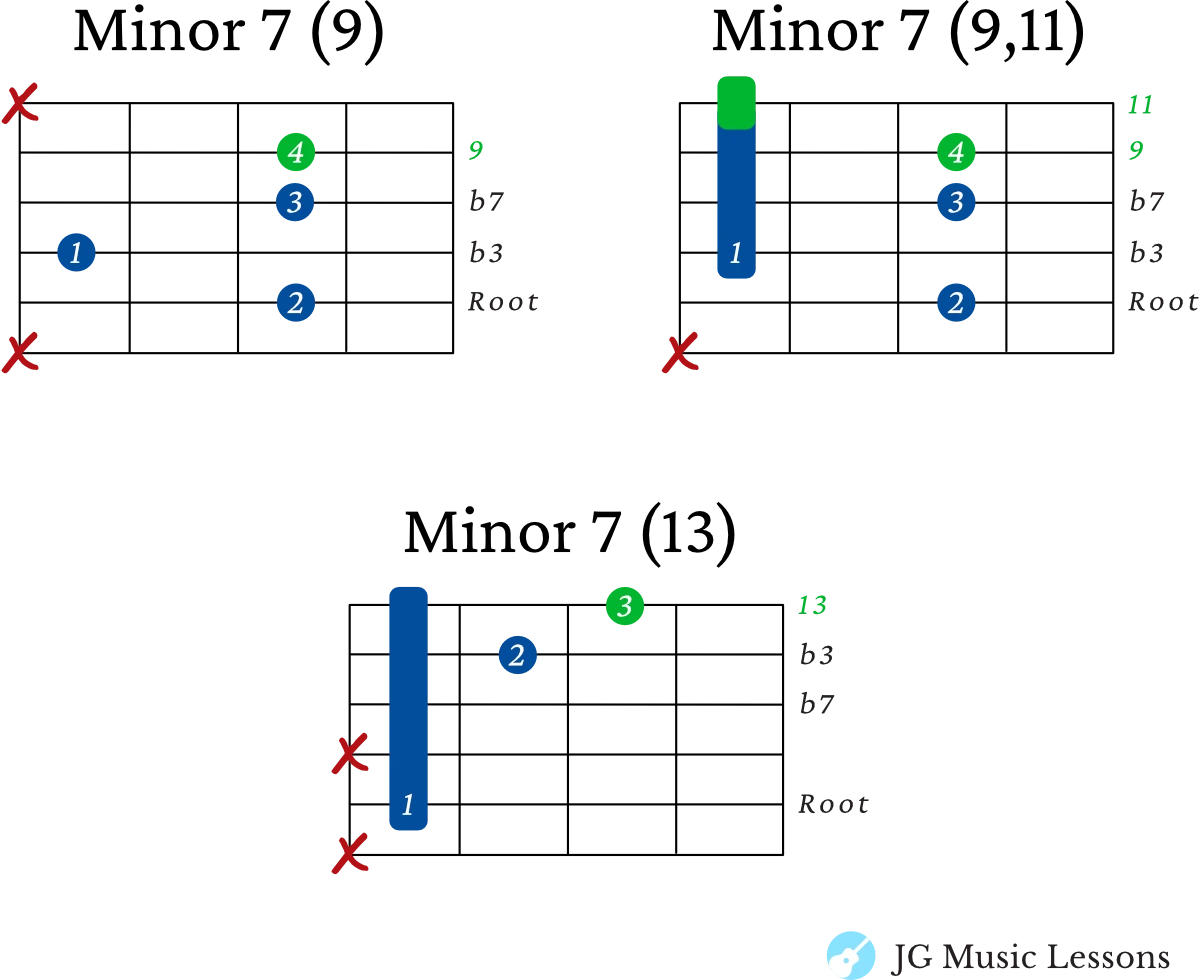
Minor 7 extended chords on the 6th string
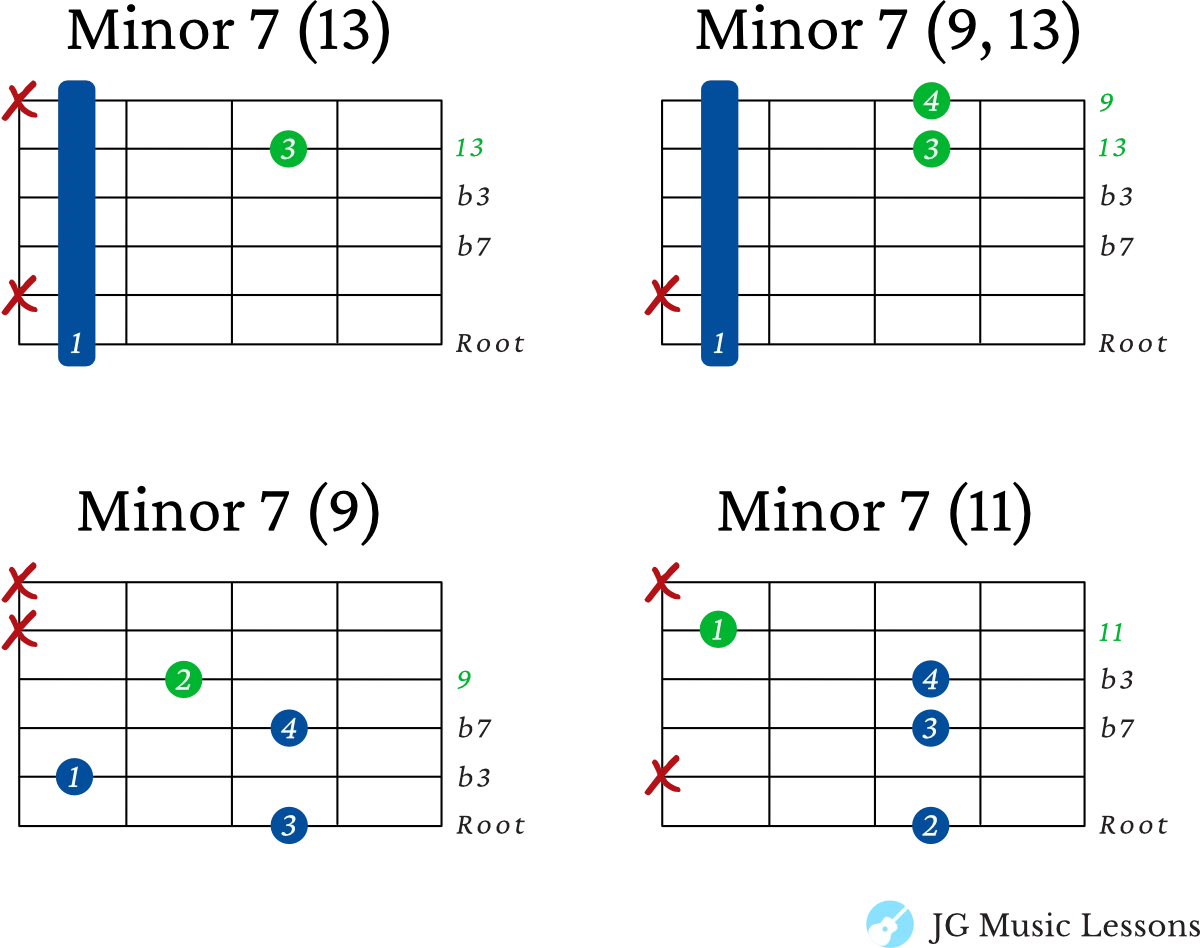
Minor 7 extended chords on the 5th string
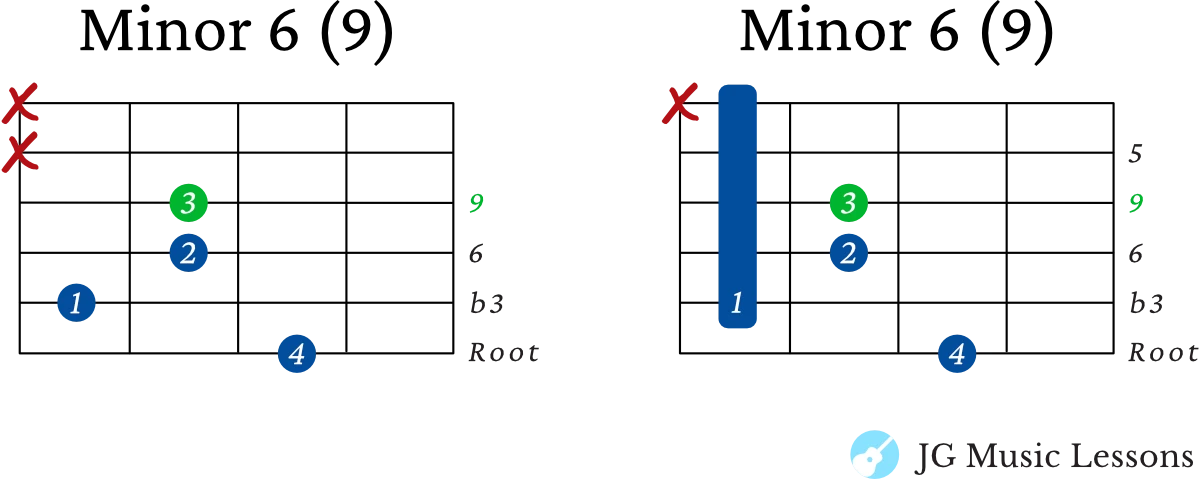
Minor 6 extended chords on the 6th string
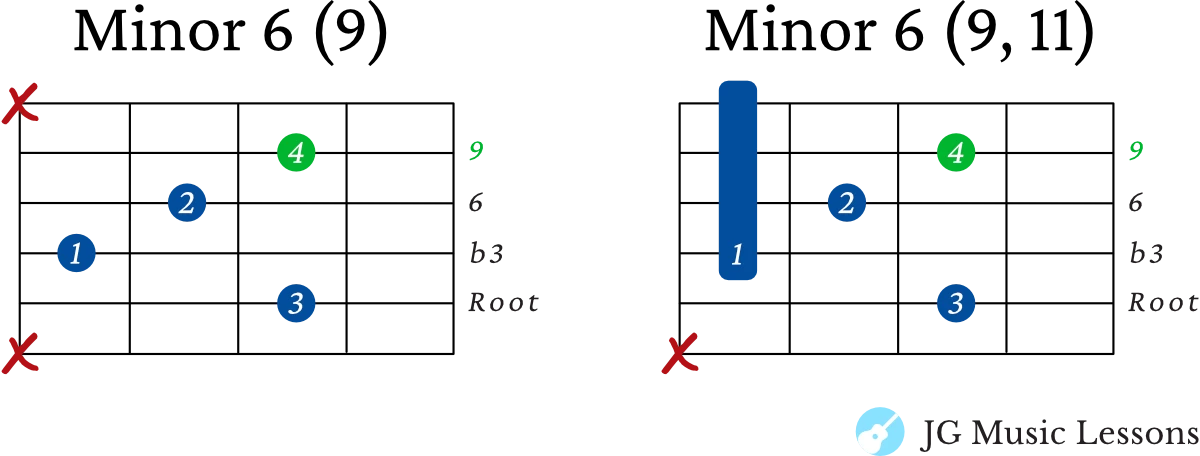
Minor 6 extended chords on the 5th string
Some voicings omit certain chord tones to make room for extensions. For example, you may leave out the 5th or, in some contexts, the 3rd while adding a 9th or another color tone.
You can also compare 7th-chord voicings with Major 6 or minor 6 sounds, which use the 6th instead of the 7th as part of the chord structure.
If you want a more in-depth look at these extended chords, I suggest checking out the guide on jazz chords.
Progression Examples Using Extended Chords
The examples below put extended chords into progressions. As you play, identify the basic chord first, then notice which added note changes the voicing.
Play each progression once as written, then choose one extended chord and replace it with the simpler 7th-chord version. Compare the two sounds.
Example 1
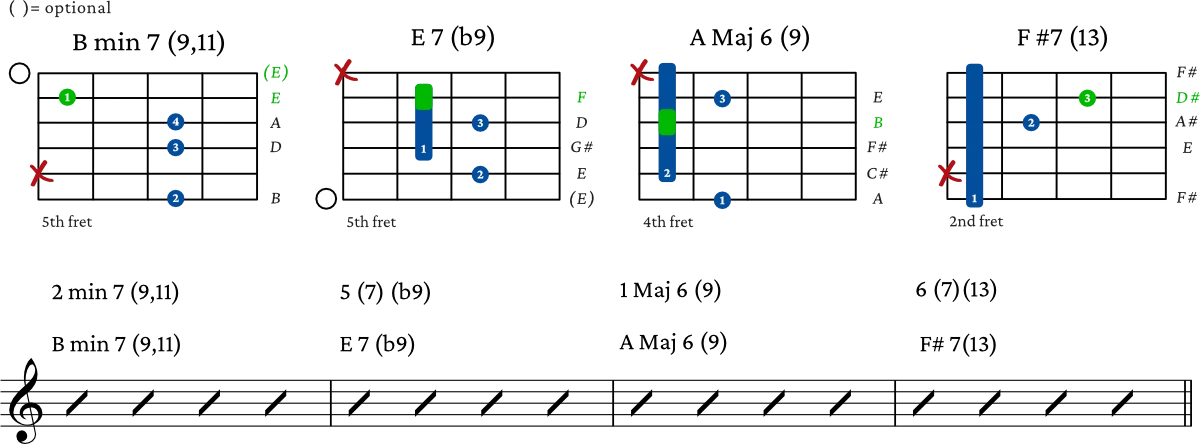
Example 2
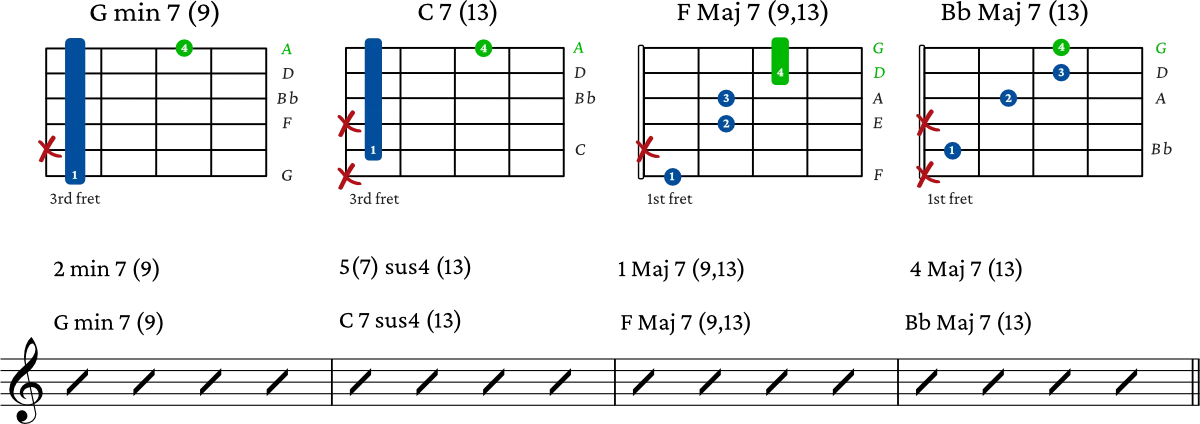
Example 3
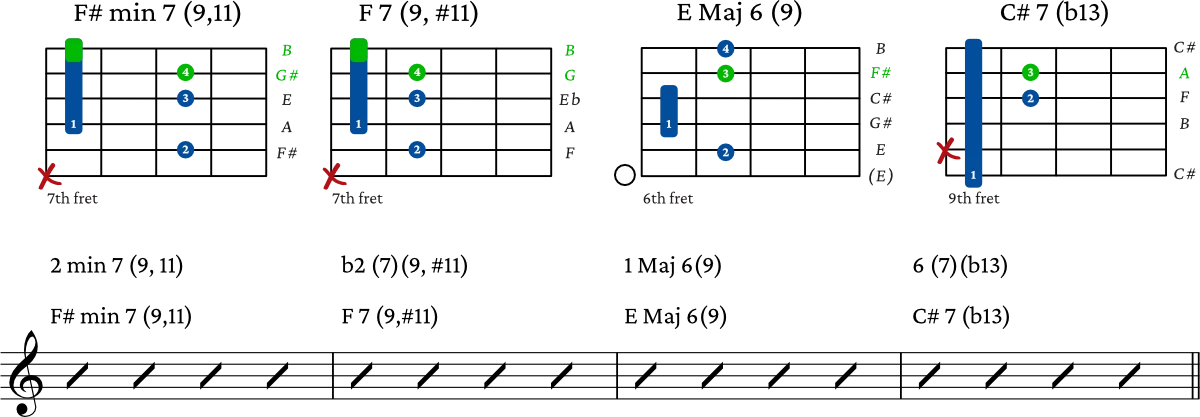
Play a 2-5-1 progression in C: D minor 7 → G 7 → C Major 7. Play it once with the plain 7th chords. Then add one extension to each chord and play it again. Compare the two versions and listen for what each added note contributes.
Included in Pro Membership ✨
Wrapping Up
Extended chords become easier to understand when you start with a familiar chord structure and add one note at a time.
Begin with a shell or 7th chord, choose a 9th, 11th, or 13th, and listen to how that one addition changes the sound.
From there, the larger voicing library in this lesson gives you more ways to use extensions across different chord qualities and areas of the fretboard.
Before continuing
You’re ready to continue when you can start with a familiar 7th-chord or shell shape, add one extension such as a 9th or 13th, and use the extended voicing in a short progression while hearing the difference from the plain 7th chord.
Next: Continue in the Mastery Roadmap to keep exploring chord extensions and jazz harmony.
📘 Get the free Practice Blueprint: Build better habits and make your progress more consistent. Download the free guide →