
Did you know there are several ways to play the same chord using different bass notes? In this lesson, we are exploring how to play chord inversions on the guitar.
Using inversions will give you different ways of hearing a chord. They can also make your chords sound more interesting when you use them to connect to other chords.
In this lesson, we’ll cover the Major and minor chord inversion shapes starting on the 6th, and 5th strings and then cover some chord progression examples to start applying them in your playing!
Let’s first cover some important terms and break down the music theory to start learning your chord inversions!
Skill Builders Roadmap Focus · View Roadmap →
Your goal is to recognize root position, 1st inversion, and 2nd inversion by the note in the bass. Then take one familiar Major or minor chord through all three positions and use one inversion inside a progression. Use the additional shapes as references as you expand across the fretboard.
What is a chord inversion?
A chord inversion changes which chord tone is in the bass while keeping the same chord. With a triad, there are three possible positions:
- Root position: The root (1) is the lowest note.
- 1st inversion: The 3rd is the lowest note.
- 2nd inversion: The 5th is the lowest note.
For example, for a C Major chord, we have:
- C Major chord (root position): C, E, G
- C Major chord 1st inversion: E, G, C
- C Major chord 2nd inversion: G, C, E
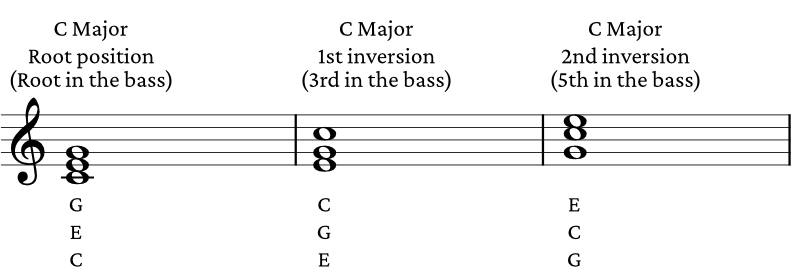
An important thing to note is that although the bass note changes according to the inversion, the other notes of the chord can be in varying orders. You can also drop the 2nd note to the bass to create spread triads (see lesson here).
As you’ll see in the charts ahead, a lot of times some of the notes in the chord get doubled in a given shape. That is normal as long you have the right bass note.
If needed, review this other lesson on triads to better understand these chord structures and how use them.
How inverted chords are written
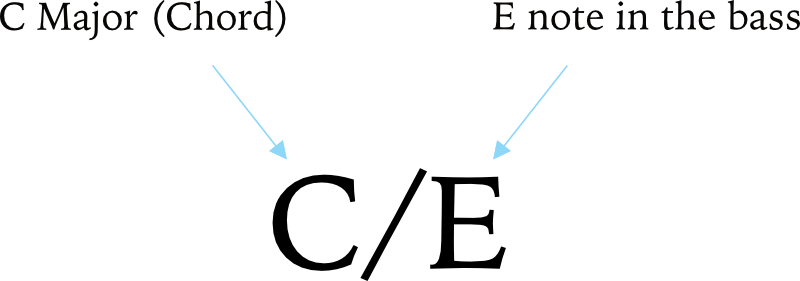
Chord inversions are commonly written as slash chords. C/E means a C Major chord with E, the 3rd, in the bass, so it is in 1st inversion. C/G places the 5th in the bass, so it is in 2nd inversion.
The same idea applies to minor chords. For example, C minor/Eb places the b3 in the bass, making it a 1st inversion C minor chord.
Need a refresher on the notation? Review How to Read Slash Chords on Guitar.
Roadmap practice: Choose one familiar Major or minor chord and learn its root position, 1st inversion, and 2nd inversion first. You don’t need to memorize every 6th- and 5th-string shape below before continuing.
Chord inversions on the 6th string
We’ll first cover some chord shapes you can use across the 6th string for Major chords and then for minor chords.
Keep in mind that there are occasions when you can add some open strings if the notes fit the chord structure but in general, you can simply use the shapes here for any chord.
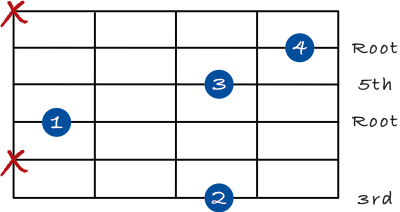
In the following chord charts, the chord tones are written next to each string.
The lowest horizontal line is the thickest string (low E) and the highest horizontal line is your thinnest string (high E).
6th string, 1st inversion Major chord shape 1
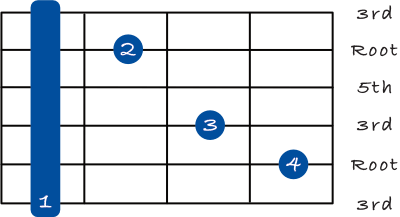
6th string, 1st inversion Major chord shape 2
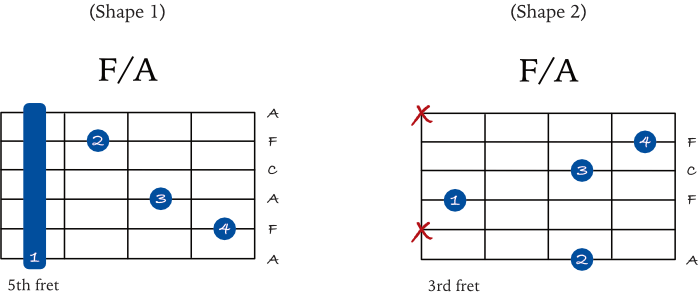
6th string, 1st inversion Major chord examples
As you can see we have the same chord F/A (F over A) but we have two different ways of playing this chord.
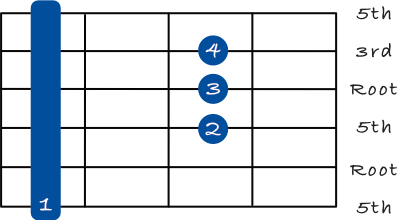
6th string, 2nd inversion Major chord shape 1
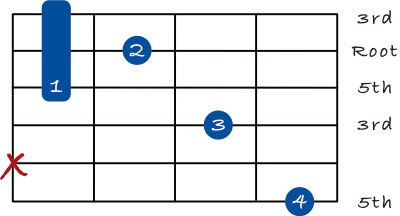
6th string, 2nd inversion Major chord shape 2
6th string 2nd inversion Major chord examples
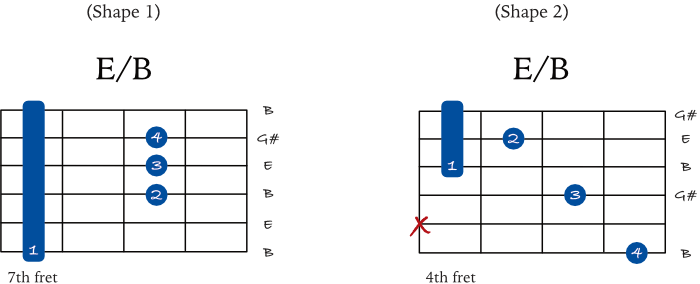
6th string, 1st inversion minor chord shape
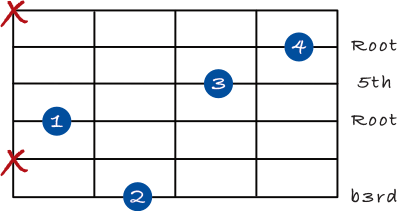
6th string, 1st inversion minor chord shape example
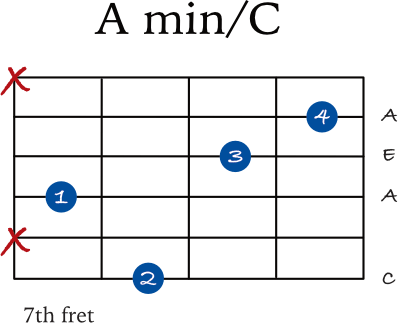
Chord inversions on the 5th string
5th string, 1st inversion Major chord (Shape 1)
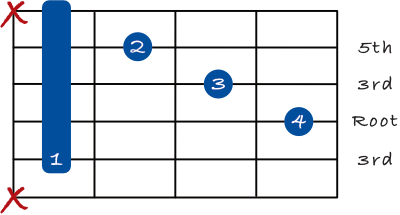
5th string, 1st inversion Major chord (Shape 2)
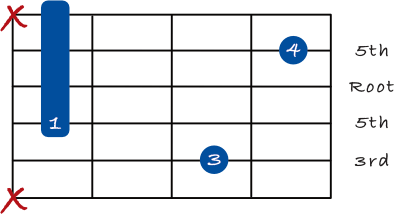
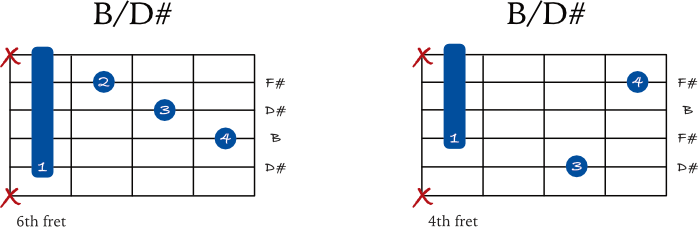
5th string, 1st inversion Major chord examples
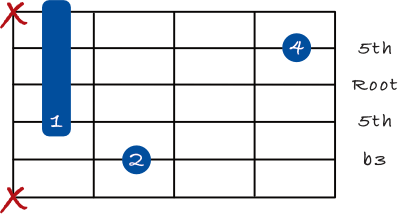
5th string, 1st inversion minor chord (Shape 2)
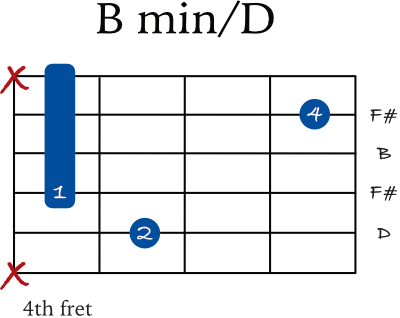
5th string, 1st inversion minor chord (Shape 2) example
Chord progression examples using inversions
The examples below show how inversions can change the bass movement inside a progression. Start with one example and compare it with the same progression using root-position chords. Listen to what changes in the bass line and how the chords connect.
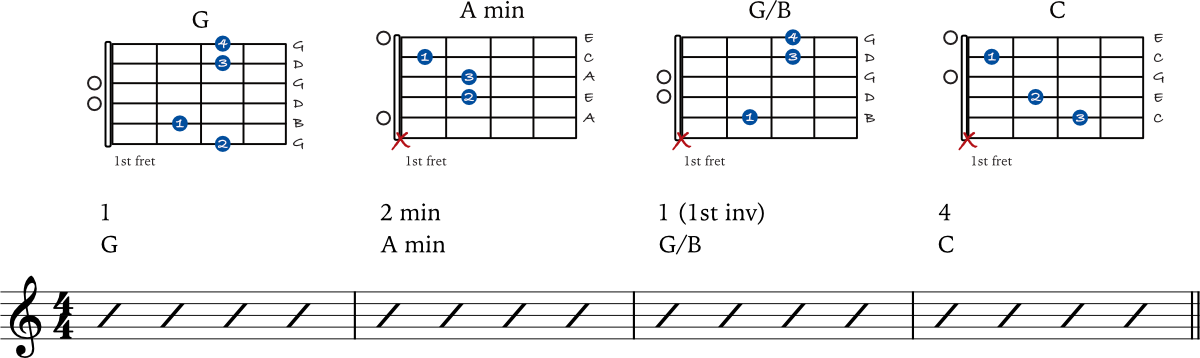
1. Using inversions to walk up the bass line
Instead of using a minor 3 chord to walk up the chords in a progression, you can use the 1 chord in 1st inversion instead. Like this:
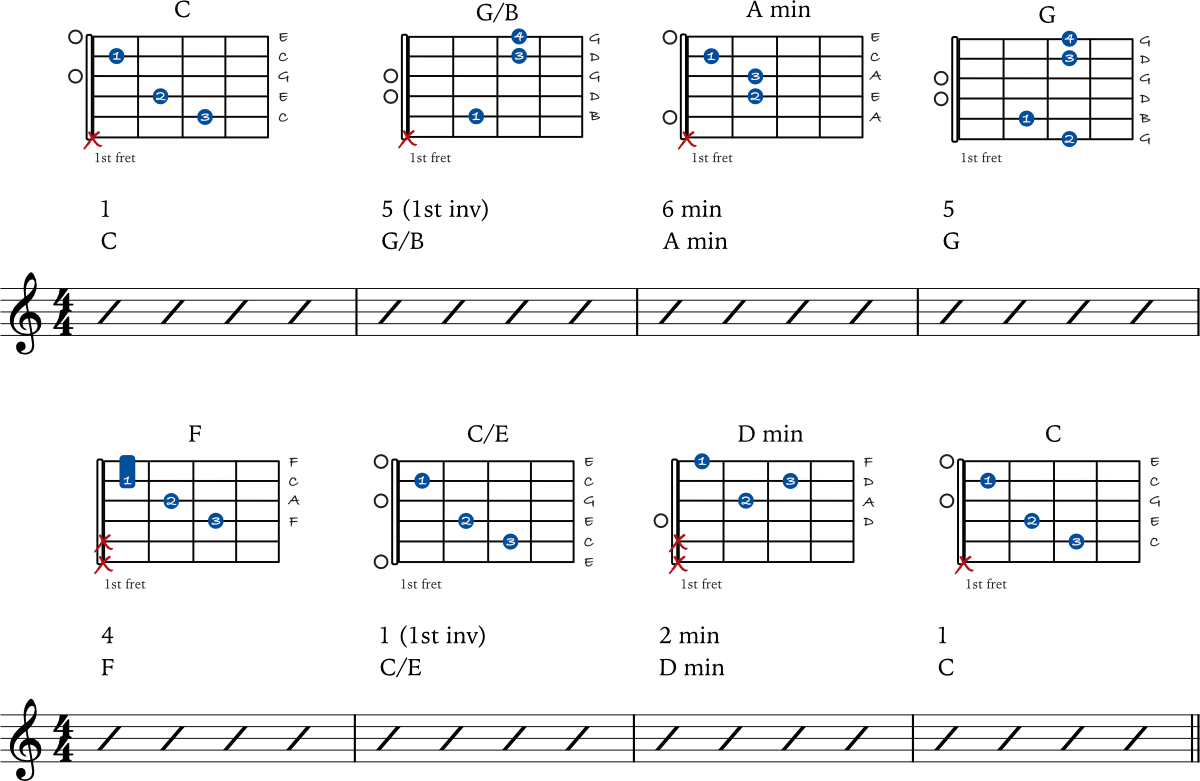
2. Using inversions to walk down the bass line
This 8 measure example now walks down the diatonic chords in C Major with a few chord substitution using inverted chords in measures 2 and 6.
Included with Pro
Take this lesson a little further.
This bonus section is included with Pro Membership. Pro also gives you the full Guitar Roadmap to keep your learning in order, plus direct access to me when something isn’t clicking.
Already a member?
Log in →
Go deeper: Triads use root position, 1st inversion, and 2nd inversion. Since 7th chords contain four chord tones, they also have a 3rd inversion. This is useful to understand, but focus first on getting the three triad positions comfortable.
7th chord inversions
Just like triad chords, 7th chords also have inversions. Since 7th chords have four chord tones, this means that we would also use the 3rd inversion, meaning the 7th chord tone is in the bass.
For example, here are two examples of chords in 3rd inversion.
- C Maj7/B means a C Major 7 chord with a B in the bass.
- C7/Bb would mean a C7 chord with a Bb in the bass.
To review those chord types, see Essential 7th Chords on Guitar.
Wrapping up
Chord inversions give you different ways to play the same harmony by changing which chord tone is lowest. Root position puts the root in the bass, 1st inversion puts the 3rd in the bass, and 2nd inversion puts the 5th in the bass.
Start with one Major or minor chord and practice all three positions until you can identify them by the bass note. Then use one inversion inside a familiar progression and listen to how the bass line connects the chords.
As this becomes more familiar, try the same idea with other chords and different keys. You can also return to the slash chord lesson whenever you want to review how these inversions appear in chord symbols.
Before continuing
You’re ready to continue when you can identify root position, 1st inversion, and 2nd inversion by the bass note, play one familiar chord in all three positions, and use at least one inversion inside a chord progression.
Next: Continue in the Skill Builders Roadmap to see where this skill fits and what to practice next.
📘 Get the free Practice Blueprint: Build better habits and make your progress more consistent. Download the free guide →