
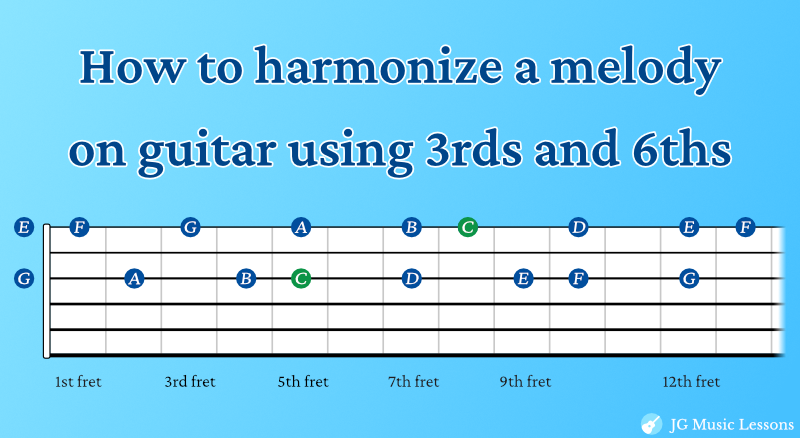
One way to develop a melody is to add a second note above or below it. On guitar, 3rds and 6ths are especially useful because they can make a melody sound fuller while still keeping the original line clear.
In this lesson, you’ll learn how to find 3rds and 6ths from a scale, apply them to a short melody, and use harmony to create variation in an arrangement.
Mastery Roadmap Focus · View Roadmap →
Take a short melody in one key and harmonize part of it in 3rds and part in 6ths. Listen to how each interval changes the sound, then choose where harmony adds useful contrast to the melody.
Identify which scale to use
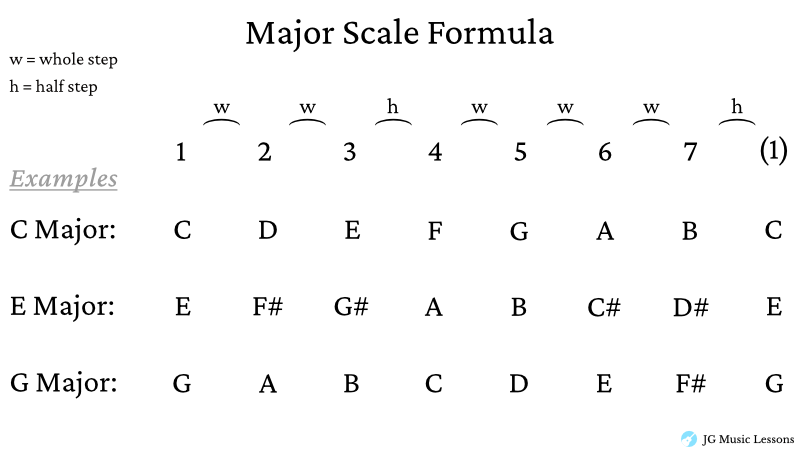
Before adding harmony, identify the key or scale your melody is using. This gives you a group of notes to work from when choosing harmony notes.
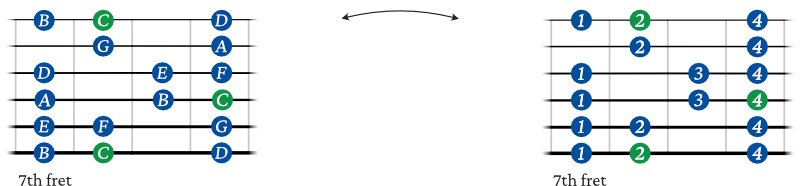
We’ll use the C Major scale as our note set for the examples below because its notes are easy to see and apply on the fretboard. If you need a refresher, review the Major scale shapes before continuing.
For example, here is one way to play the C Major scale in one position:

How to harmonize a melody
To harmonize a melody in 3rds, add the note that is three scale degrees away while staying inside the same scale.
For example, in C Major:
- C → E
- D → F
- E → G
- F → A
A simple shortcut is to start on the melody note, skip the next scale note, and use the following one.
Below, you’ll see the Major scale with 3rds added to each note, along with a guitar-friendly way to play them. Pay attention to the finger numbers above the notes to help with comfortable fretting-hand positioning.
C Major scale harmonized in 3rds

Roadmap practice: Play the C Major scale in one position and add a 3rd above each note. Then choose four consecutive scale notes and play only those harmonized pairs until you can see how the shapes move together.
C Major scale harmonized in 6ths
For 6ths, count six scale degrees from the melody note while staying inside the key. A 6th is the inversion of a 3rd, which is why 3rds and 6ths are closely related harmonically.
For example, in C Major:
- C → A
- D → B
- E → C
- F → D
6ths create a more open and melodic harmony, making them a great choice for adding warmth and movement to your melodies. Try the example of 6ths on guitar below.

The scale exercises help you find the intervals. The next step is deciding how they sound on an actual melody.
Melody example in C
Before we dive into harmonizing, let’s start with a short melody in the key of C Major that we’ll use for the following examples.

Here is a backing track of what this melody sounds like:
Now try this example of the same melody now with the interval of a third above the notes.
3rds above the melody

3rds below the melody
You can also try thirds below the notes by skipping the previous note of the scale.
Here is what this would sound like:

How to harmonize a melody in 6ths
Now let’s try the same melody in 6ths and compare the sound with the 3rds.
6ths above the melody

6ths below the melody

Roadmap practice: Play the original C Major melody first. Then try one version with 3rds and one with 6ths. You can place the harmony above or below the melody depending on the register that feels comfortable. Compare the versions and choose which sound you prefer for one short part of the phrase.
Use harmony to create variation
You don’t have to harmonize every note of a melody. Often, harmony is more effective when it appears only in selected phrases or when a melody repeats.
For example, you might play a melody by itself the first time, then add 3rds or 6ths when the phrase returns. This keeps the melody recognizable while giving the arrangement more movement.
Variation 1
In this example, we’ll start measures 1 and 2 with the original melody. Then we’ll use 6ths above the melody on measure 3 and the 3rds above the melody at the end of measure 4 to provide some contrast when repeating the phrase.

Try this: Take a short melody you already know, or use the C Major example from this lesson. Play it once by itself. On the repeat, harmonize only one or two parts using 3rds or 6ths. Keep the rest of the melody unchanged.
Breaking up intervals (Variation 2)
You can also separate the two harmony notes instead of playing them together. This turns the interval into a melodic pattern and gives you another way to vary a repeated phrase.

You can use these intervals to enhance specific phrases or sections of a piece. With practice, you’ll develop a better ear for when to add harmonies in a way that complements the melody tastefully.
Melody harmonization exercises
The exercises below give you extra ways to build fluency with 3rds and 6ths. For the Roadmap, focus first on harmonizing one short melody and using the harmony selectively.
To practice harmonizing melodies, start by choosing a scale and making sure you can play and name each note in order. Learning key signatures will also help you quickly identify the notes in any scale.
Practicing 3rds:
1. Play a scale and name the note that is a 3rd above each scale note.
2. Do the same for a 3rd below each note.
3. Begin practicing on the 1st and 2nd strings, as melodies often sit in a higher range.
4. Once comfortable, try harmonizing on the 2nd and 3rd strings, then other string pairs.
Practicing 6ths:
1. Apply the same process using 6ths above each note.
2. Practice harmonizing both ascending and descending to develop fluency.
Bonus Tip
When the chords in a progression come from the same key, you can often use that key’s scale as your starting point for finding harmony notes. Then listen for whether each harmony note fits the chord underneath it.
Included in Pro Membership ✨
Wrapping up
Harmonizing a melody starts with knowing the key, then choosing another note from that key to support the melody.
3rds and 6ths are useful places to start because they give you two related harmony sounds that work well on guitar.
The larger arranging skill is deciding when to use them. Try leaving part of a melody alone, then adding harmony when the phrase repeats or when you want a section to sound fuller.
Before continuing
You’re ready to continue when you can take a short melody in one key, add a 3rd or 6th to part of it, and choose where the harmony makes the arrangement stronger without needing to harmonize every note.
Next: Continue in the Mastery Roadmap to connect melody and chords more directly.
📘 Get the free Practice Blueprint: Build better habits and make your progress more consistent. Download the free guide →